

Try it now!
Managing your investments has never been easier!





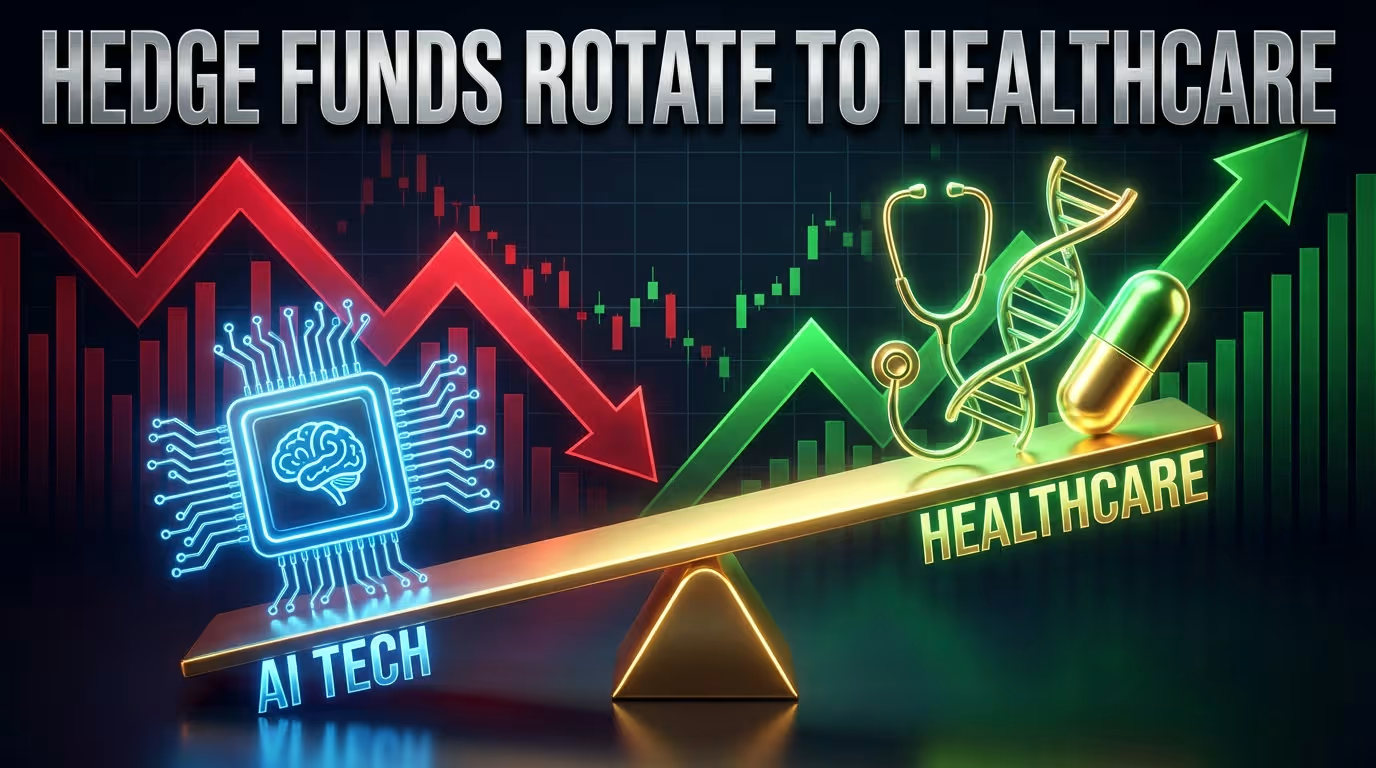

In the third quarter of 2025, hedge funds initiated a strategic portfolio rotation, pulling back from AI-fueled tech stocks like Nvidia and Big Pharma heavyweight Eli Lilly, while increasing allocations to other segments within technology and healthcare. This move reflects growing concerns over inflated AI valuations and a resurgence of confidence in healthcare, buoyed by strong merger and acquisition (M&A) activity and innovative R&D breakthroughs.
According to Goldman Sachs' recent analysis of 684 hedge funds managing approximately $4 trillion in equity (about 6% of the U.S. stock market capitalization), there was a nuanced evolution in Q3 investment positioning. Hedge funds have posted an average 12% return year-to-date as of November 19, predominantly from long positions; yet, a growing appetite for risk aversion is evident beneath those numbers.
Liquidity-conscious hedge funds maintained concentrated stakes in large-cap stocks, allocating roughly 70% of their long exposure to their top ten holdings. Technology remained the largest sector with 19.5% of net exposure. However, within that sector, subtle reallocations were underway.
The exposure to the so-called "Magnificent Seven" tech giants (excluding Tesla) remained steady at about 12%, consistent with a two-year median, but individual positions shifted notably. Hedge funds increased bets on Meta, Microsoft, Tesla, and Amazon, while notably trimming Nvidia positions. Goldman Sachs identified Microsoft as a “Rising Star,” noting a surge in hedge fund investment in the company during the quarter.
Sentiment on Nvidia was mixed. Data from Bloomberg tracking 909 funds showed nearly equal increases and decreases in holdings. Significant divestments included Peter Thiel’s Thiel Macro exiting a $100 million Nvidia stake and SoftBank offloading $5.8 billion worth. Both cited fears over a looming AI investment bubble, even as they continued supporting AI startups elsewhere.
Amid cooled enthusiasm for AI-centric tech, hedge funds pivoted toward defensive sectors, with healthcare taking a clear leadership position. Hedge funds overweighted healthcare by a record 997 basis points versus the Russell 3000 benchmark, levels unseen in over a decade apart from early 2020 and 2023.
This rotation is underpinned by a multipart rationale. Jonathan Kaplis, CEO of PivotalPath research, highlighted a resurgence in healthcare M&A and favorable regulatory conditions. Advances in clinical trials alongside AI-driven research innovations are further bolstering investor confidence.
Healthcare stocks outperformed robustly in November, with the S&P 500 Health Care index rising 10%, the best among all sectors. Eli Lilly’s shares soared 29%, making it the first healthcare company to reach a $1 trillion market cap.
Other notable performers included Merck (+23%), driven by new deal flow and promising clinical data following Keytruda’s patent expiration; Regeneron (+21%), boosted by approval of enhanced eye treatments; and Amgen (+14%) following strong earnings beats — all outperforming the broad market’s 1.1% decline during this period.
David Massa, CEO of Roundhill Financial, remarked, "Healthcare’s prior underperformance led many to doubt its growth prospects. Now, with sustained top-line and profit expansion, the market is rewarding this turnaround." Valuations remain attractive, with healthcare trading at a forward price-to-earnings ratio (P/E) of 18.7, versus the broader S&P 500’s 22.1.
Goldman Sachs highlighted 20 “Rising Stars” in Q3 characterized by sharp hedge fund inflows and an average market capitalization of $32 billion. These names historically outperform their peer group in subsequent quarters. Among them:
Dover Corporation: A diversified industrial conglomerate benefiting from electrification and data center expansion, bolstered by recent acquisitions.
Tempus AI: A U.S. medtech company specializing in AI-driven oncology diagnostics with strong growth tied to partnerships with AstraZeneca and GSK.
Las Vegas Sands: Integrated resort operator with assets in Macau, Singapore, and Las Vegas, expecting growth from VIP gaming and post-renovation non-gaming revenue.
Norwegian Cruise Line Holdings: Rapidly expanding cruise operator with strong revenue and occupancy metrics, capitalizing on demand for family vacations.
Keurig Dr Pepper: Beverage giant expanding K-Cup coffee pod sales and integrating the €15.7 billion acquisition of JDE Peet’s.
ETF allocations among hedge funds dipped slightly last quarter but remained above the decade average at about 4% of long positions. The SPDR Gold Shares ETF (GLD) holdings surged to $1.9 billion, a high not seen since 2020, and representing the only commodity ETF in the top 20.
Notably, hedge funds use ETFs primarily for hedging, with 71% of ETF exposure held on the short side, compared to 32% short exposure in individual stocks. Meanwhile, median short interest across S&P 500 constituents hovers at multi-year highs near 2.4% of market capitalization.
These dynamics contributed to October’s significant but short-lived market short squeeze. Ahead of the Federal Reserve’s October 29 rate decision, managers aggressively cut short positions, anticipating monetary easing. The rally, however, caught many off-guard, fueled by option traders seeking protection against rapid upside moves.
Thomas Thornton of Hedge Fund Telemetry noted, “It’s difficult to short a market that feels poised to rally,” but warned that rate cuts might not be as extensive as expected, keeping risks present. Goldman’s basket of heavily shorted stocks initially surged nearly 40% from early September to mid-October, then dropped over 20% in November, amplifying portfolio volatility.
Post-squeeze, short interest surged particularly in smaller caps across utilities, consumer staples, and healthcare—sectors sensitive to borrowing cost cycles. Some short interest levels hit near 30-year highs amid concerns about inflation pressures and consumer demand.
Q3 2025 distinctly marked a tactical shift for hedge funds: reducing exposure to high-flying AI tech leaders like Nvidia due to valuation worries, while embracing healthcare as a more resilient defensive bet. Bolstered by strong fundamentals, industry consolidation, and AI-powered innovations, healthcare is emerging as a favored sector.
Investors should monitor this evolving hedge fund landscape, prioritizing companies with solid cash flows, innovation potential, and macro resilience. The highlighted “Rising Stars” offer a useful guidepost toward identifying potential long-term winners in this shifting environment.
For personalized data-driven investment recommendations tailored to your portfolio and goals, visit 8FIGURES—the AI-powered investment advisor designed to help you navigate complex market cycles with confidence.
Managing your investments has never been easier!