

Try it now!
Managing your investments has never been easier!





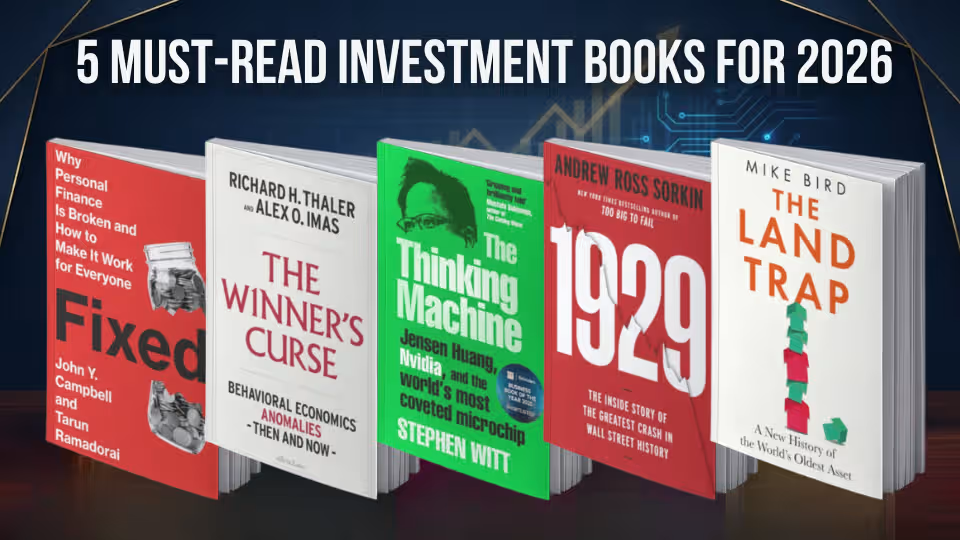

Investing is a long-term game, and a useful 2026 reading list should do more than recap market headlines. The strongest books help investors understand cycles, behavior, incentives, technology platforms, and real assets - the same themes that matter for public-market investors, founders, and angel investors evaluating private companies.
This shortlist covers five angles: 1929 for market-cycle history, The Winner's Curse for behavioral discipline, Fixed for personal-finance system design, The Thinking Machine for AI infrastructure and Nvidia, and The Land Trap for real-asset risk.
For angel investors specifically, the most transferable lessons are behavioral bias control, cycle awareness, and technology-market literacy. This is not a pure startup-fundraising bookshelf; it is a cross-discipline investor reading list for making better allocation decisions in 2026.

This book is essential reading for investors who want to understand market crashes and financial cycles. Andrew Ross Sorkin provides a deeply researched account of the 1929 stock market crash, one of the most important events in financial history.
Using newspapers, diaries, government records, and historical data, Sorkin recreates the speculative boom that led to the collapse. He explains how Federal Reserve policy, political decisions, and investor psychology combined to create a fragile financial system.
Unlike simplified crash narratives, this book challenges common myths and shows that market downturns are rarely caused by a single factor. For long-term investors, it offers valuable lessons about risk, speculation, and systemic vulnerability.
Why it matters for investors:
Understanding past market crashes helps investors recognize warning signs and avoid repeating costly mistakes.
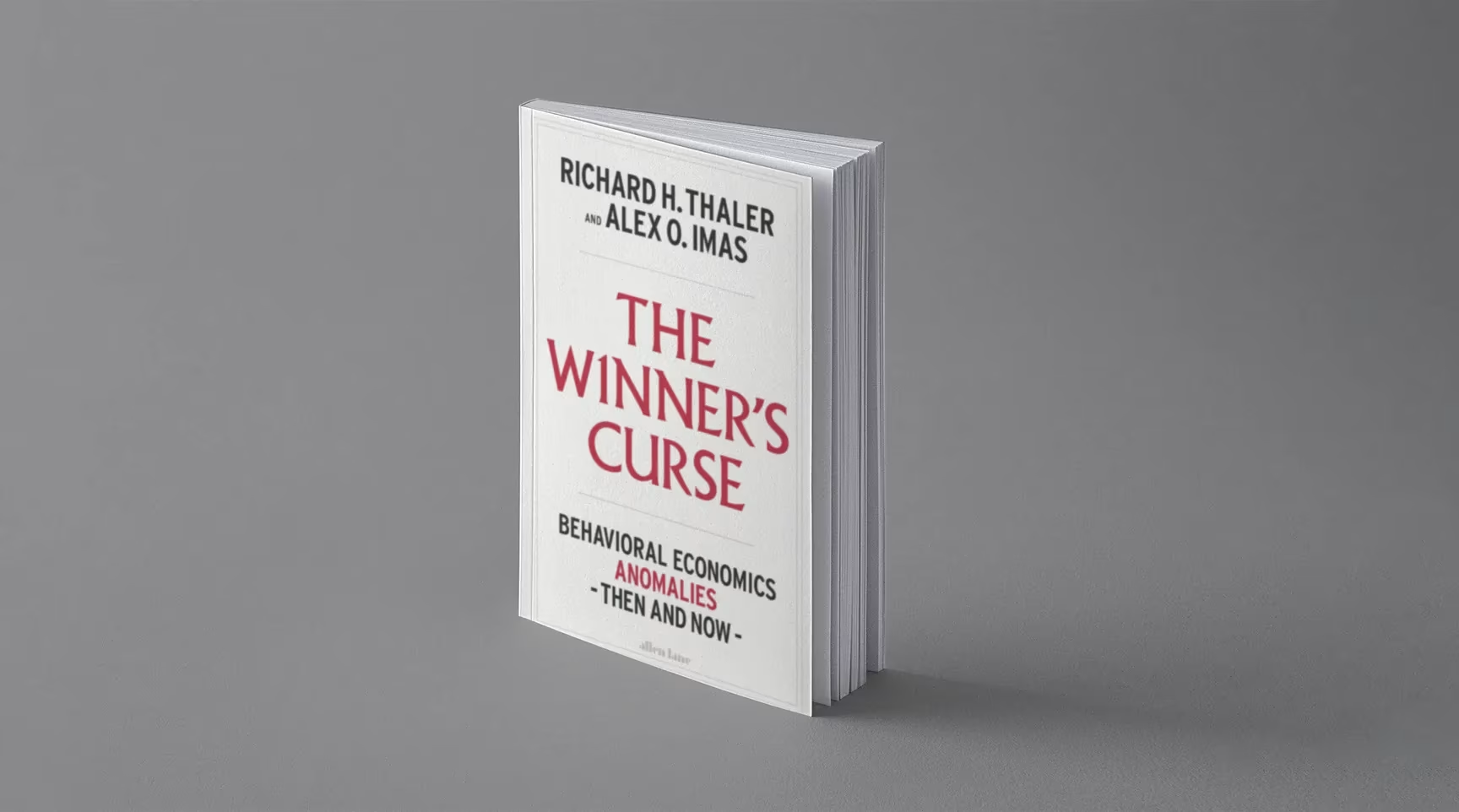
Behavioral finance plays a critical role in investing success. In this book, Nobel Prize winner Richard H. Thaler and economist Alex O. Imas explain how cognitive biases influence financial decisions in predictable ways.
The authors explore common behavioral errors, including overconfidence, loss aversion, sunk-cost fallacies, and emotional decision-making. Through real-world examples from auctions, insurance markets, and consumer finance, they show how these biases consistently affect outcomes.
The book also highlights practical solutions, such as default investment options and behavioral nudges, that help individuals make better financial decisions.
Why it matters for investors:
Recognizing behavioral biases can improve portfolio discipline and reduce costly emotional mistakes.

This book examines why personal finance systems often fail ordinary investors. John Y. Campbell and Tarun Ramadorai argue that financial outcomes are shaped more by system design than by individual knowledge.
They show how wealthier individuals benefit from lower borrowing costs, better investment access, and more favorable financial products. Meanwhile, lower-income households face high fees, expensive credit, and limited options. Rather than focusing solely on financial education, the authors propose structural reforms. These include simplifying financial products, limiting predatory practices, and designing consumer protections that work by default.
Why it matters for investors:
Understanding financial system incentives helps investors navigate markets more effectively and evaluate policy-driven risks.
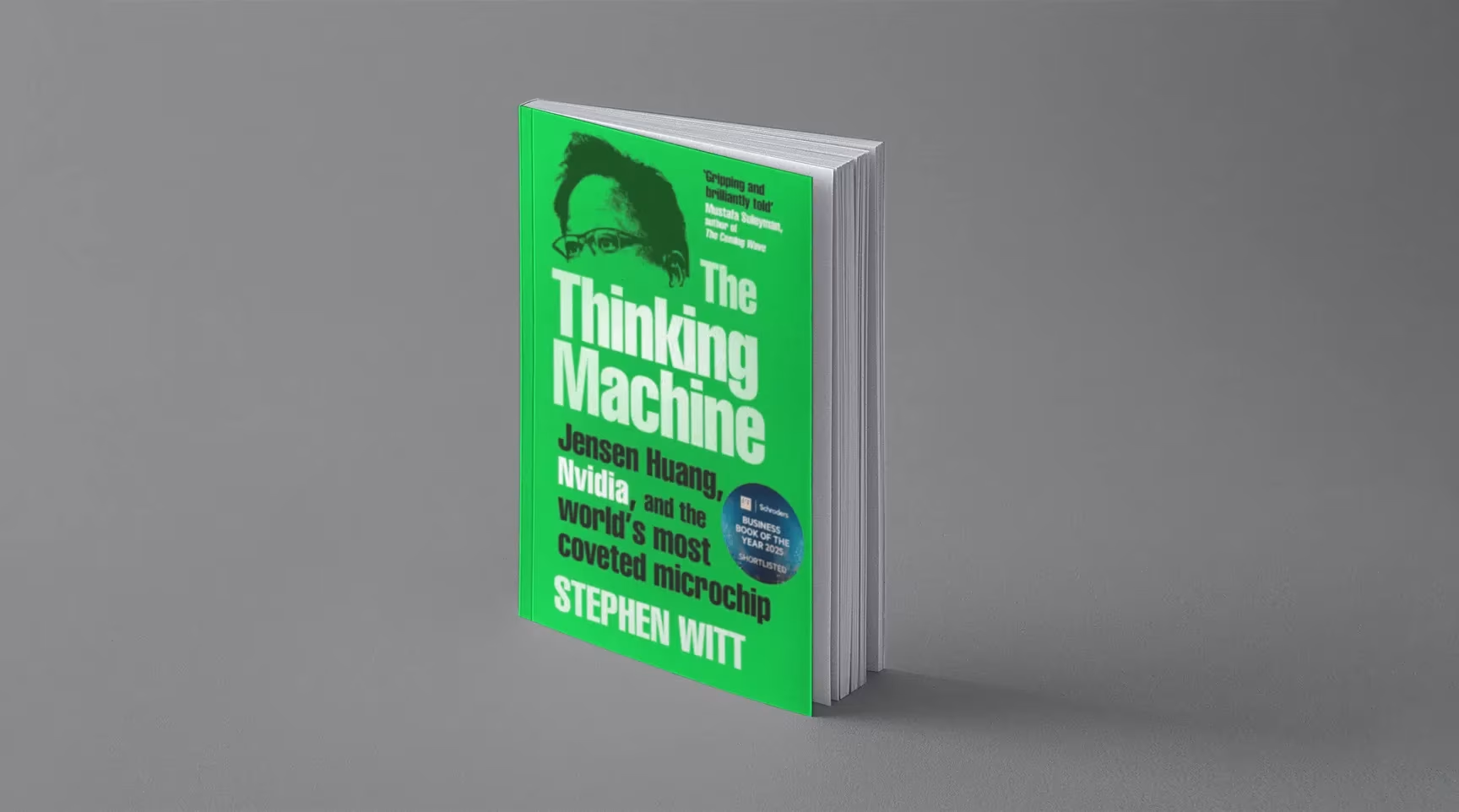
Technology is a major driver of modern investment returns. The Thinking Machine tells the story of Nvidia’s rise from a niche chipmaker to a dominant force behind artificial intelligence and advanced computing.
Stephen Witt chronicles Nvidia’s strategic pivots, leadership decisions, and long-term vision under CEO Jensen Huang. The book explains why Nvidia’s GPUs became essential to AI development and how early investments in parallel computing reshaped the company’s future. The technical concepts are explained clearly, making the book accessible to investors without engineering backgrounds.
Why it matters for investors:
Understanding technological disruption helps investors identify companies with durable competitive advantages and long-term growth potential.

Real estate and land are often considered safe investments, but The Land Trap challenges this assumption. Mike Bird explores how land has repeatedly fueled financial bubbles, inequality, and debt crises throughout history. The book traces land-driven booms from early America to modern Asia, showing how easy credit and policy incentives can distort prices. Bird emphasizes that institutions, governance, and economic structure determine whether land becomes a productive asset or a systemic risk.
Why it matters for investors:
Real estate investing requires historical and institutional awareness, not just assumptions about stability.
Angel investing requires a different lens than public stock picking, but the decision problems overlap. The Thinking Machine is the most relevant for investors studying AI infrastructure and startup ecosystems. The Winner's Curse helps with overconfidence, auction dynamics, and valuation discipline. 1929 adds cycle awareness, which matters when private-market enthusiasm is high.
If your portfolio includes startups, pair the reading list with a tracking system for rounds, ownership, dilution, and realized versus unrealized value. The 8FIGURES Angel Investment Tracker is built for that workflow.
Investors can use insights from these books to strengthen long-term performance. Studying market history improves cycle awareness. Behavioral finance helps control emotional reactions. Understanding system design clarifies incentives and risks. Tracking technological change identifies future growth drivers. Evaluating assets in context reduces overconfidence.
Taken together, these works encourage a more disciplined and thoughtful approach to investing, one grounded in context rather than prediction. For investors looking to translate that understanding into day-to-day decisions, modern tools are increasingly part of the process. AI-driven investment advisors such as 8FIGURES aim to bring these principles together by combining historical data, behavioral insights, and real-time market analysis into practical portfolio strategies.
Managing your investments has never been easier!