Portfolio Analyzer
Analyze your portfolio across every account and asset class and get clear rebalancing suggestions.

4.7 · 700+ ratings

$100M+ Connected Liquid Assets

Analyze your portfolio across every account and asset class and get clear rebalancing suggestions.
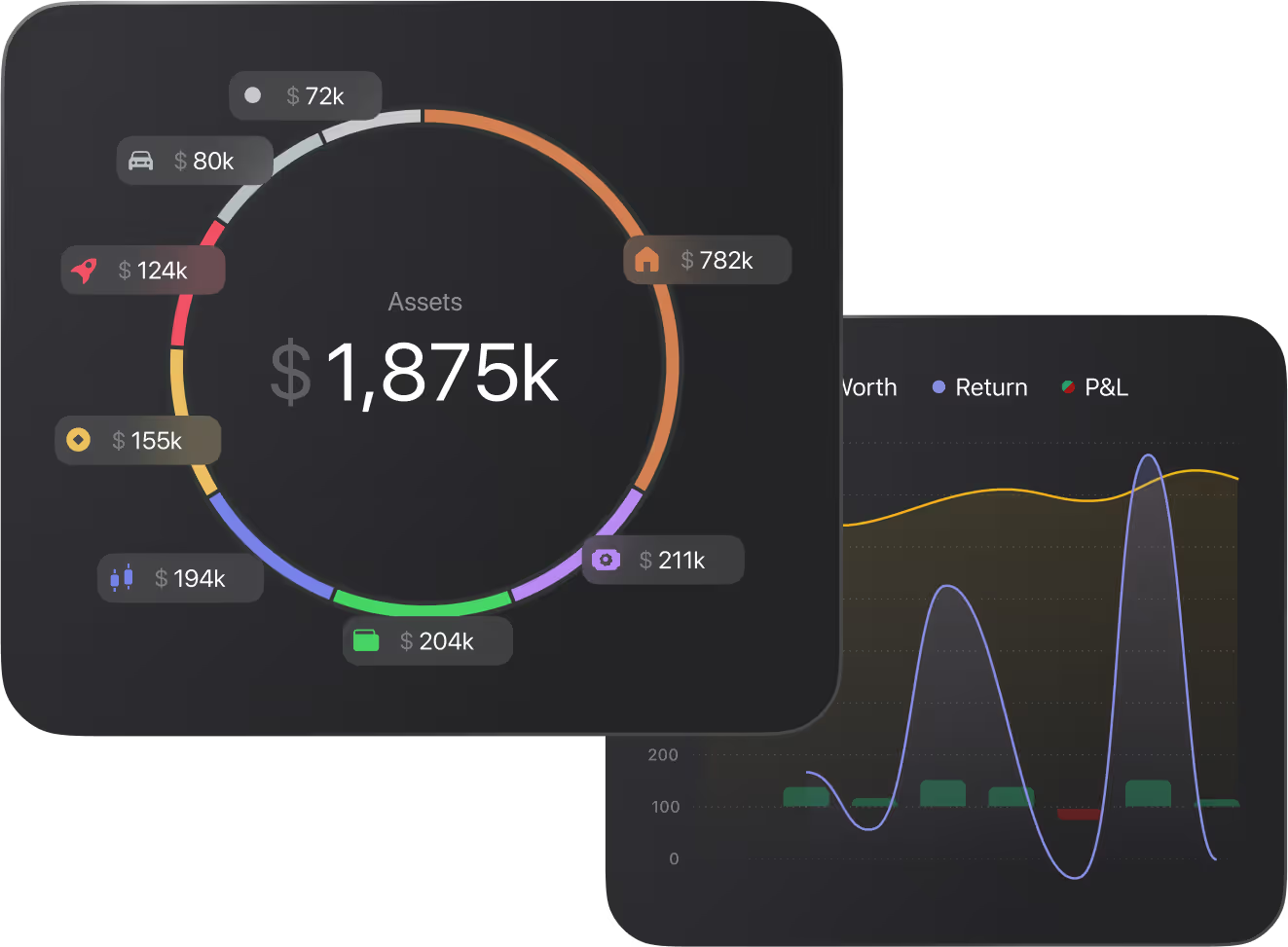
Go from scattered accounts to a fully analyzed, rebalanced portfolio in three steps.
Deep allocation analysis, actionable rebalancing suggestions, and continuous drift monitoring, all in one portfolio analyzer.

See your true exposure across all accounts. Deep fund analysis breaks down what you actually own inside every ETF and mutual fund, so hidden concentration in a single sector or country never catches you off guard.
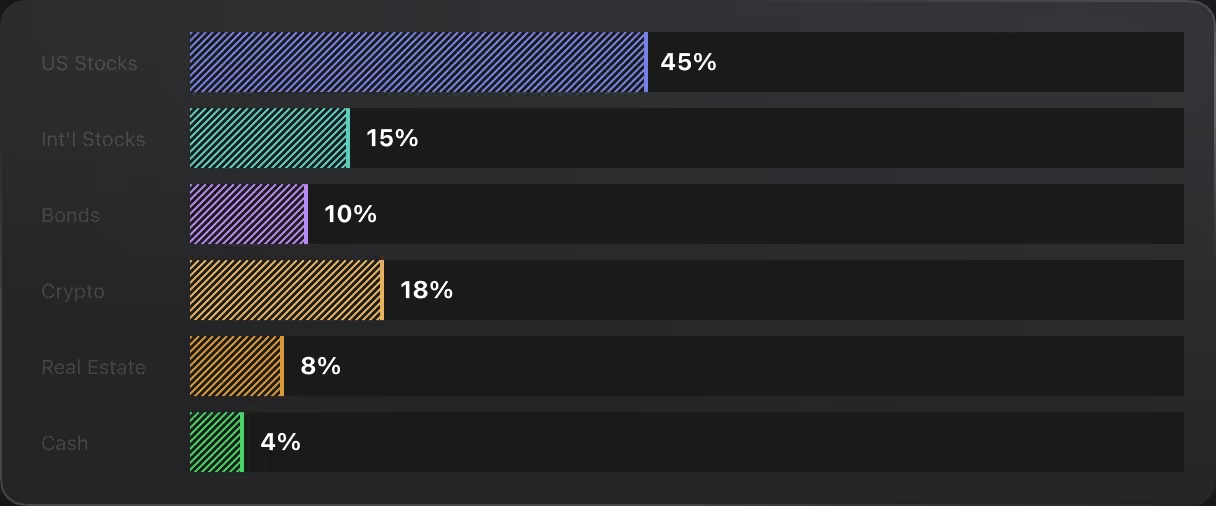

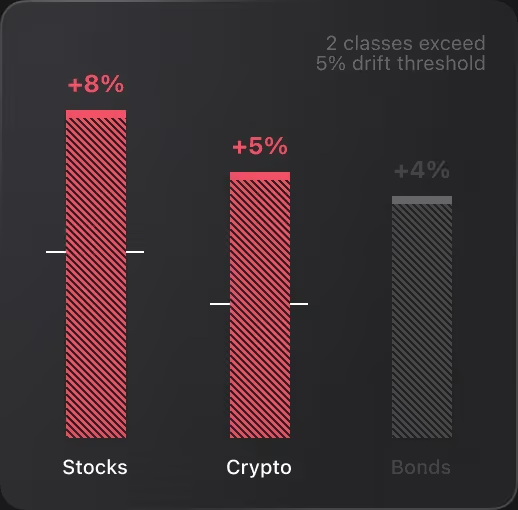
Get notified before small imbalances become big problems.
Enter how much you have in each asset class. We will analyze your exposure and flag potential risks.
8FIGURES tracks every asset class in one app and adds it all up into your net worth.

Join thousands of investors who use 8FIGURES to stay balanced and on track.
Portfolio allocation is how you divide your investments across asset classes: stocks, bonds, real estate, crypto, cash, and alternatives. The split you choose shapes both long-term return and short-term volatility. A 25-year-old saving for retirement and a 60-year-old living on investment income need very different allocations, even if their total portfolio value is the same.
Most investors hold accounts at multiple brokerages, retirement plans, and crypto exchanges. A single brokerage pie chart only shows part of the picture. A true portfolio allocation analyzer consolidates every account and breaks down the underlying holdings inside each ETF and mutual fund to reveal real exposure by sector, geography, and asset class. Without this view, you might own three ETFs that all hold the same mega-cap tech stocks, pushing your concentration far above what you intended.
The difference between an asset allocation calculator and a proper investment portfolio analyzer is depth. A basic calculator asks you to type in percentages and compares them to a model. An analyzer like 8FIGURES pulls live data from your connected accounts, breaks down every fund to its underlying positions, and maps your actual exposure across sectors and geographies. That level of detail is what separates a rough estimate from a real picture of your risk.
8FIGURES pairs allocation analysis with actionable rebalancing suggestions. Instead of showing you a chart and leaving you to figure out the next step, the app shows you how to rebalance, how much to shift, and why it makes sense for your risk profile.
Portfolio rebalancing is the process of buying and selling holdings to bring your allocation back to target percentages. Markets move daily, so even a perfectly balanced portfolio drifts over time. If stocks outperform bonds for a year, your stock allocation grows larger than planned, increasing risk beyond your comfort zone.
There are three common strategies. Calendar-based rebalancing adjusts at fixed intervals (quarterly or annually). Threshold-based rebalancing triggers trades only when drift exceeds a set percentage, such as 5 points from target. Hybrid rebalancing combines both, reducing unnecessary transaction costs. Research shows disciplined rebalancing improves risk-adjusted returns because it forces you to sell high and buy low.
A good rebalancing tool does more than flag that you are off target. It needs to account for tax
implications across account types, transaction costs that eat into returns, and the difference between minor drift that can wait and major drift that demands action. Many investors skip rebalancing because the math feels overwhelming. Automated portfolio rebalancing removes that friction by generating specific trade lists you can act on immediately.
8FIGURES automates the hard part: daily monitoring, drift alerts when any asset class moves beyond your threshold, and specific trade suggestions with plain-English reasoning. For more on how 8FIGURES tracks your complete financial picture, see the net worth tracker and individual trackers for stocks, bonds, crypto, and real estate.
A typical asset allocation calculator asks for your age, risk tolerance, and maybe your income, then returns a pie chart with suggested percentages. The problem is that these outputs are generic. They do not account for your actual holdings, the overlap between your funds, or the fact that your 401(k), brokerage, and crypto wallet each tell a different piece of the same story.
Most online calculators also treat every asset class as a single bucket. They show "stocks at 60%" without distinguishing between US large-cap, international developed, and emerging markets. An investment portfolio analyzer that goes deeper reveals that your "diversified" stock allocation might actually be 80% US technology companies once you decompose the ETFs inside your retirement account.
8FIGURES bridges this gap. The portfolio allocation analyzer connects to your actual accounts, pulls live positions, and breaks them down to the individual holding level. You see the real picture, not an estimate. From there, the rebalancing tool generates specific buy and sell suggestions with reasoning that explains why each trade matters for your risk profile and goals.
The portfolio rebalancing calculator above lets you enter the dollar amount you hold in each asset class and instantly see your allocation percentages, a risk evaluation, and specific flags for areas that may need attention. It is a quick way to get a snapshot of your portfolio balance before connecting your accounts for a full analysis.
Start by entering your approximate holdings in each category. The calculator evaluates your exposure against widely accepted benchmarks: equity allocations above 80% are considered aggressive, crypto above 15% carries elevated volatility (Morgan Stanley research shows even a 6% crypto position can nearly double overall portfolio risk), and bonds below 10% leave limited downside protection during market drawdowns.
Keep in mind that a calculator provides a starting point, not a complete plan. Real portfolios include individual stocks, sector-specific ETFs, and alternative assets that require deeper analysis. For a full investment portfolio analysis with deep fund breakdowns, drift monitoring, and personalized rebalancing suggestions, connect your accounts to 8FIGURES and let the platform do the heavy lifting.